
IQ LAB / 03
IQ LAB / 01
ACCELERATE
ROME × CITIES
INFRASTRUCTURE × PROXIMITY
SPEED CAN EXIST IN THE STARTING POSITION.

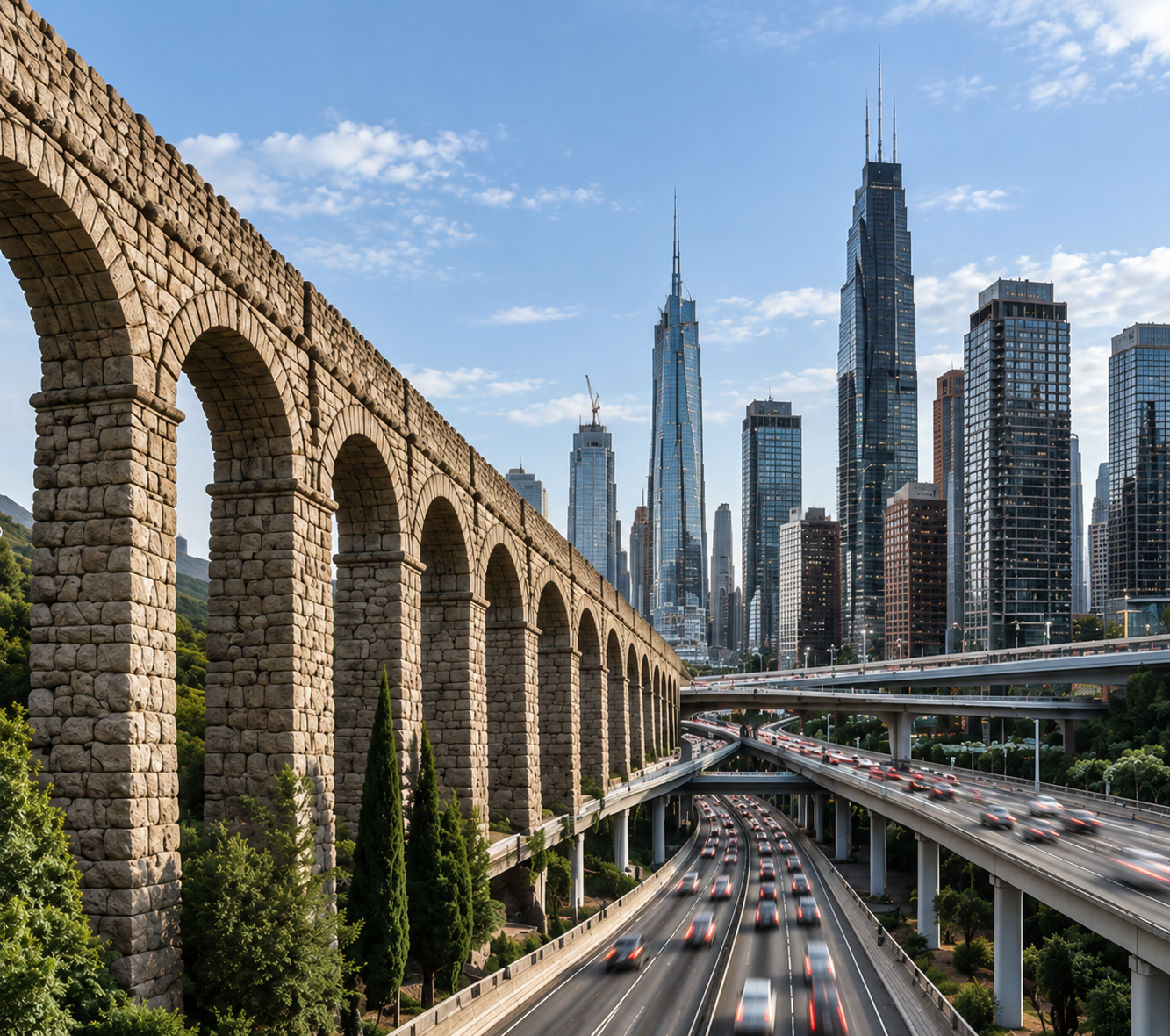
Roman roads gave later travelers established routes across enormous territory, aqueducts carried water through infrastructure created for repeated use, ports concentrated commercial activity around established facilities, and administrative structures coordinated information, resources, and decisions across distant locations.
Cities reveal another source of speed by concentrating specialized expertise, institutions, capital, technology, culture, markets, and relationships within reach of complementary human capability. Rome and cities therefore place two sources of acceleration beside one another: established architecture that reduces reconstruction and concentrated capability that reduces the distance between a need and a useful resource. Pasted markdown
Rome makes reusable infrastructure visible across time. Cities make accessible human capability visible across proximity.
ROME
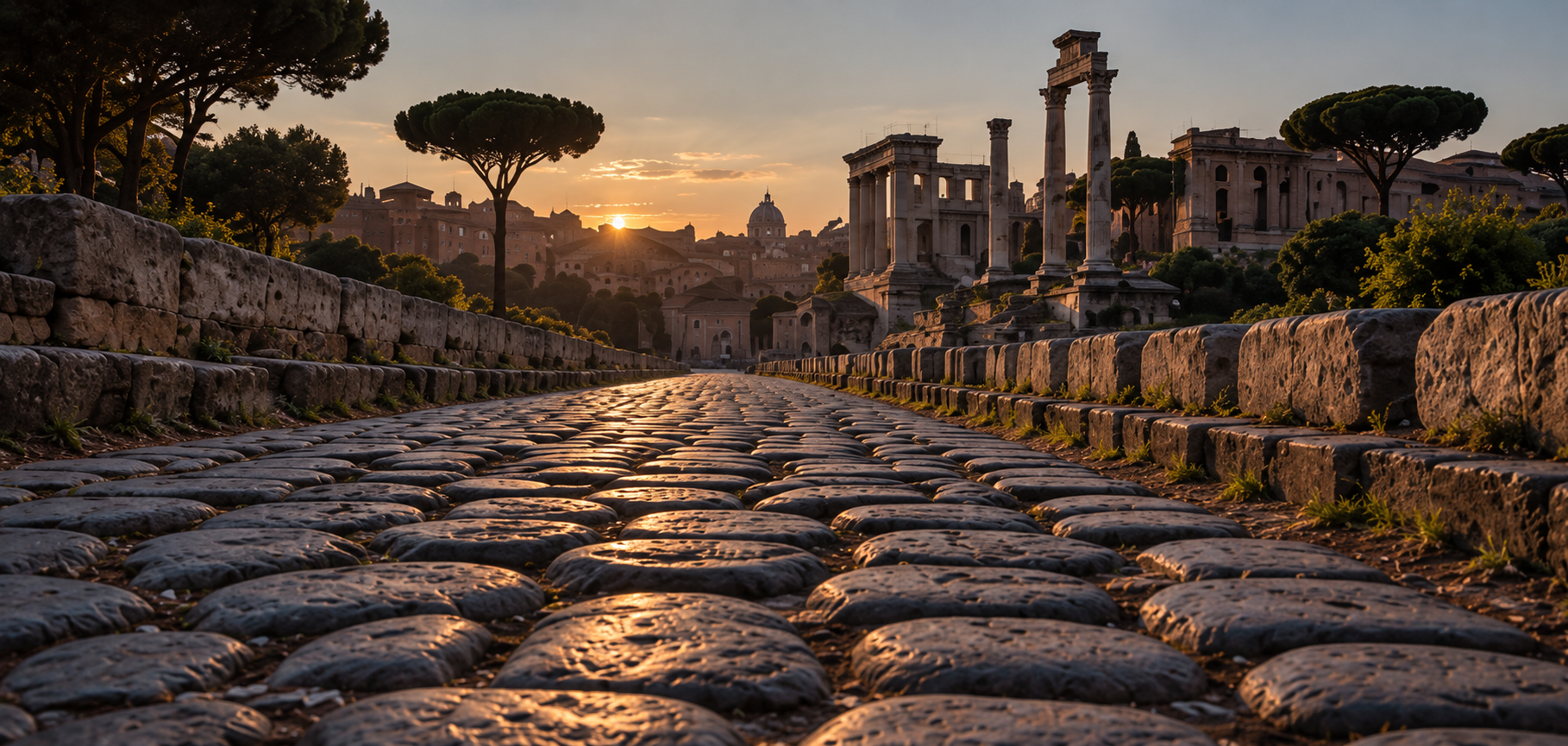
Roman roads represented more than completed construction projects. Established routes gave future movement advanced physical starting positions by providing paths for travelers, commerce, military movement, and settlements across territory already connected through earlier construction.
Aqueducts created another form of repeated advantage as engineering, materials, gradients, channels, and distribution systems combined inside infrastructure capable of carrying water repeatedly across distance. Ports concentrated facilities required for exchange, administrative structures organized information and decisions across large territories, and engineering knowledge allowed successful techniques to travel into additional construction.
Earlier human effort remained active through structures available for repeated use.
EARLIER CONSTRUCTION CAN KEEP WORKING.
Which forms of construction can continue increasing the reach of human activity across later periods?
Infrastructure extends the productive life of construction by placing established architecture within reach of future activity. Roads can support journeys far beyond the movement that justified an original build, methodologies can support decisions far beyond the projects that produced the underlying knowledge, and documented standards can carry accumulated judgment into execution led by people outside the original decision.
Repeated use changes the economics of effort by allowing subsequent action to begin with useful architecture already available. The starting position moves forward as earlier construction continues participating in later activity.
IQ INQUIRY / ROME
CITIES
PROXIMITY CHANGES ACCESS.
Cities concentrate human capability by placing researchers near institutions carrying accumulated knowledge, entrepreneurs near capital and market intelligence, artists near other disciplines and audiences, and students inside environments containing expertise accumulated across generations.
Specialization gives people depth, while proximity gives specialized capability greater reach through repeated access to complementary resources. Physicians can encounter research developed across other specialties, engineers can collaborate with designers, entrepreneurs can connect technical expertise with investment and distribution, and public leaders can connect operating knowledge with institutional resources and community relationships.
Each productive connection places additional capability within reach of current work.

Which forms of achievement become available as specialized capabilities gain repeated access to one another?
Proximity changes the resources surrounding an individual actor by placing complementary expertise, institutional knowledge, market access, and extended networks within practical reach. Deep specialization can coexist with broad capability as surrounding people and institutions contribute resources developed across other fields.
Dense connection increases the number of productive combinations available within a shared environment and creates acceleration through access rather than individual pace.
IQ INQUIRY / CITIES

THE INTERSECTION
INFRASTRUCTURE × PROXIMITY
Rome and cities introduce a different conception of speed by separating acceleration from individual velocity. Infrastructure places completed construction within reach of current activity, while proximity places complementary human capability within reach of current execution.
The intersection places a consequential inquiry at the center of ACCELERATE:
WHICH FORMS OF SPEED EMERGE FROM GREATER MOVEMENT, AND WHICH FORMS OF SPEED EMERGE FROM BEGINNING WITH MORE ALREADY WITHIN REACH?
The inquiry shifts attention from pace toward starting position. Builders can increase speed through individual effort, or builders can begin with established systems, accumulated knowledge, trusted relationships, reusable tools, proven standards, existing infrastructure, and accessible expertise already available for use.
ACCELERATE studies the relationship among infrastructure, proximity, access, purpose, and starting position, examining both the speed architecture creates and the consequential direction receiving greater reach through that architecture.
Recurring activity creates an architectural choice between rebuilding previous decisions and carrying accumulated judgment into future execution. Documented standards can preserve decisions across recurring cycles, knowledge systems can preserve operating intelligence across leadership transitions, and reusable systems can place established methods inside future work.
Infrastructure converts selected forms of earlier effort into resources available for repeated use. Acceleration emerges as future work begins with useful construction already complete, while the purpose embedded within established architecture continues shaping the decisions, actions, and outcomes the infrastructure makes easier to produce.
INFRASTRUCTURE CHANGES THE AMOUNT OF CONSTRUCTION REQUIRED.
PROXIMITY CHANGES THE AMOUNT OF SEARCH REQUIRED.
Resources gain practical value through accessibility. Specialized expertise can exist beyond the reach of current execution, while trusted relationships, strong networks, institutions, technology, shared language, and established operating connections can shorten the distance between a consequential need and a useful resource.
Proximity reduces the search required for consequential resources and creates acceleration through access. Geographic concentration provides one form of proximity, while relationships, institutions, technology, and established trust create additional forms capable of connecting specialized capability across much greater distances.
INFRASTRUCTURE AND PROXIMITY MULTIPLY ONE ANOTHER.
Proximity becomes more productive as surrounding capability enters architecture capable of carrying expertise into implementation. Networks of experts gain greater reach through reusable systems, groups of institutions gain greater productive range through shared standards and coordinated processes, and dense environments gain greater consequence through architecture capable of converting connection into repeated execution.
Infrastructure also gains greater range as people access, use, adapt, strengthen, and extend established architecture. Methodologies gain reach through practitioners, research institutions gain reach through scholars and partners, and transportation networks gain value through the destinations and communities connected across the system.
Infrastructure organizes access, while proximity expands the human capability available to established architecture. Their interaction increases productive range and magnifies the consequence of the purpose governing the architecture, making the direction of increased capability as consequential as the capability itself.
ACCELERATION CAN ACCUMULATE.
Established structures can support thousands of later actions, trusted relationships can open access to entire networks, reusable tools can preserve earlier analysis, and documented standards can carry accumulated judgment across repeated execution. Institutions extend the pattern across generations by preserving knowledge and infrastructure beyond individual participation.
Each retained resource reduces reconstruction, search, coordination, or interpretation during subsequent work. Speed becomes a capability that people, teams, institutions, and fields can build into the starting position of future activity.
IQ FINDING / 03
Acceleration gains structural force when reusable infrastructure preserves earlier construction and proximity places complementary human capability within reach of current execution, while purpose determines which outcomes receive the increased speed, reach, and capability created through the architecture.
Rome makes repeated use visible through infrastructure, while cities make accessible specialization visible through proximity. Their intersection reveals acceleration created through an advanced starting position rather than greater individual pace.
Which forms of infrastructure deserve greater speed and reach as scale, complexity, and participation expand?
Greater scale increases the people, resources, relationships, decisions, and dependencies moving through an architecture, while greater complexity increases the consequence of coordination and greater participation introduces additional expertise alongside additional perspectives and interests. Increased speed therefore raises the importance of examining the purpose, people, and outcomes receiving greater reach through established architecture.
The frontier opens a larger investigation into resource movement across expanding networks and the information generated as resources encounter different uses, environments, and results. The next research position begins with movement itself.
IQ FRONTIER / 03
ACCELERATE ADVANCES THE THIRD MOVEMENT.
Infrastructure preserves useful construction, proximity expands access to complementary capability, and repeated access reduces the reconstruction and search required during future execution.
The third IQ Lab movement creates an advanced starting position for resource reallocation.

CONTINUE TO IQ LAB / 04
REALLOCATE
TRADE × FAILURE
EXCHANGE × EXPERIMENTATION
The next investigation studies resource movement and the information created as action encounters operating conditions.
A STRONGER NEXT
STARTS HERE.