
IQ LAB / 01
IQ LAB / 01
DECIDE
STARS x WATER
DIRECTION × CONCENTRATION
CONSEQUENTIAL MOVEMENT BEGINS WITH DIRECTION AND FORCE.
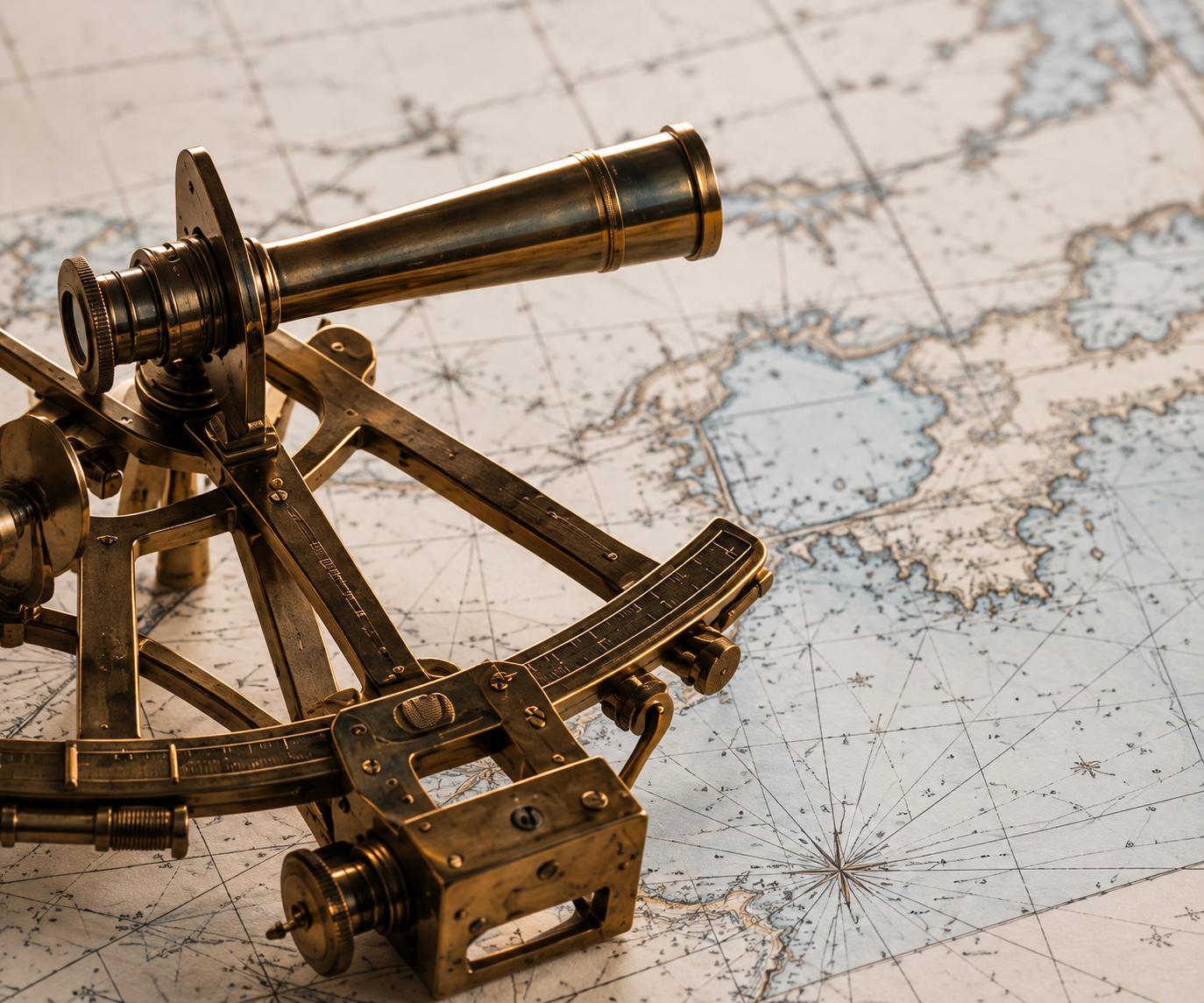
Navigators crossed oceans while coastlines remained beyond sight, using celestial patterns as stable reference points across distances larger than immediate visibility. Reliable orientation allowed movement to begin while substantial portions of a route remained undiscovered.
Water reveals a complementary condition of movement as broad distribution produces limited directional force and concentrated currents carve stone, turn turbines, and reshape landscapes. The underlying resource remains constant as arrangement changes productive force.
Stars establish direction across incomplete visibility while water reveals the force created through concentration.


STARS
For thousands of years, navigators used celestial patterns to establish orientation across oceans, deserts, and continents. Reliable reference points allowed navigators to establish direction, begin moving, observe changes in position, and adjust routes as additional information became available.
Celestial navigation extended orientation across distances far larger than human vision could contain from any single position. Movement expanded the information available throughout a journey as each new position created another vantage point and each observation refined the relationship among present position, intended direction, and continuing movement.
Direction operated as an active relationship among reference points, position, movement, and adjustment.
DIRECTION ACROSS DISTANCE
Which forms of information provide sufficient direction for consequential movement across an incomplete route?
Complete routes provide extensive information at the beginning of a journey, while distant destinations create decision environments shaped by incomplete visibility. Reliable reference points gain value as distance extends beyond immediate sight and directional judgment must operate across a longer horizon.
The investigation emphasizes reference point quality over information quantity. Useful reference points must remain sufficiently stable to orient movement and sufficiently relevant to connect present position with intended direction.
Ambition increases the consequence of directional judgment as intended destinations extend farther beyond immediate visibility.
IQ INQUIRY / STARS
WATER
FORCE THROUGH ARRANGEMENT
Water spreads, gathers, accelerates, stores pressure, follows channels, encounters resistance, and changes surrounding landscapes through repeated movement. Reservoirs can hold enormous stored energy, narrow channels can organize flow, increased pressure can intensify force, and sustained movement can extend an effect across time.
Resource quantity explains only part of the outcome as arrangement determines the share of water participating in a particular movement and the conditions governing resulting force. Rivers, irrigation systems, turbines, hydraulic systems, erosion, and engineered channels demonstrate different productive characteristics created through changing relationships among concentration, pressure, direction, resistance, and duration.

At which point does resource arrangement produce greater force than additional resource quantity?
Concentration creates power through selection by directing a greater share of available water along a common path. Sustained flow gives concentrated movement time to produce an effect, pressure changes intensity, and resistance changes behavior.
The inquiry reaches beyond volume into architecture as deliberate arrangement increases productive force while underlying resource quantity remains stable.
IQ INQUIRY / WATER

THE INTERSECTION
DIRECTION × CONCENTRATION
Stars and water introduce a consequential tension between directional judgment and concentrated force. Strong reference points can organize movement across incomplete visibility, while concentrated resources can create substantial force along a selected path.
The intersection places a deeper inquiry at the center of DECIDE:
WHICH DIRECTION DESERVES CONCENTRATED FORCE AS MOVEMENT BEGINS ACROSS AN INCOMPLETE ROUTE?
Consequential decisions allocate time, attention, capital, expertise, relationships, infrastructure, and organizational effort toward selected movement while alternative uses remain available. Greater concentration increases the consequence of directional judgment, greater distance increases the value of reliable reference points, and continued movement generates information capable of sharpening subsequent decisions.
DECIDE studies the relationship among direction, concentration, movement, and emerging information.
DIRECTION CHANGES THE VALUE OF CONCENTRATION.
Concentration gains strategic meaning as consequential direction organizes resource use. Selected direction can align attention around a shared destination, place expertise against a defined challenge, organize investment around a consequential result, and establish a common reference point for subsequent decisions.
Concentration magnifies directional judgment as greater force increases the consequence of the reference points governing movement. A direction can remain coherent, measurable, and operationally effective while continued movement creates evidence capable of changing the judgment surrounding its value. Direction therefore carries an ongoing requirement for examination as concentrated resources increase the scale and consequence of movement.
Direction influences the productive value of concentration by determining the destination toward which concentrated force moves.
Direction gains productive force as meaningful resources begin participating in selected movement. Intellectual clarity alone can coexist with fragmented time, expertise distributed across competing uses, dispersed investment, and divided attention.
Concentration converts directional clarity into consequential movement by organizing a meaningful share of available resources around a selected path. Direction gives concentration strategic purpose, and concentration gives direction productive force.
CONCENTRATION CHANGES THE VALUE OF DIRECTION.
MOVEMENT CHANGES THE DECISION ENVIRONMENT.
Consequential movement can begin with reliable reference points and incomplete route information, allowing experience to expand the evidence available throughout the journey. Each changed position creates new observations, and accumulated observations provide additional evidence for refining the route while preserving consequential direction.
Celestial navigation makes the relationship visible through navigators whose changing positions continuously generated new information while stable reference points preserved orientation. Water reveals a complementary relationship through channels that organize concentrated movement as terrain, resistance, pressure, and flow continuously influence the current.
DECIDE therefore treats judgment as an active process extending throughout consequential movement rather than a single moment of selection.
IQ FINDING / 01
Consequential movement gains strength when deliberate direction organizes concentrated resources while continued movement expands the evidence available for evaluating subsequent decisions and the continued authority of the direction itself.
Stars make orientation visible across distance, while water makes concentrated force visible through arrangement. Their intersection reveals a decision architecture in which direction, concentration, movement, and information remain active throughout a consequential build.
Which reference points deserve continued authority as movement creates a more advanced position and a richer field of information?
Reference points can establish movement during one stage of a journey, while experience acquired through movement can deepen judgment, reveal additional conditions, and expand the information available for subsequent decisions.
The frontier opens a larger investigation into commitment, adaptation, evidence, and directional continuity as consequential direction retains strategic value and routes develop through experience.
The next research position begins with architecture created through construction.
IQ FRONTIER / 01
DECIDE OPENS THE FIRST MOVEMENT.
Direction establishes a consequential path, concentration organizes available resources around movement, and movement creates evidence capable of strengthening judgment about the route and the direction governing continued investment.
The first IQ Lab movement establishes an advanced starting position for construction.

CONTINUE TO IQ LAB / 02
BUILD
MUSIC × NATURE
The next investigation studies the relationship between accumulated expertise and conditions capable of extending the range of consequential construction.
EXPERTISE × DEVELOPMENTAL CONDITIONS
A STRONGER NEXT
STARTS HERE.